Monday, July 28, 2008

Old Dragonfly


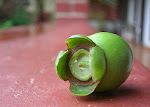
I was moved by this old dragonfly that found a resting-place on our balcony.

With its beady eyes and frayed wings, it held on to its umbrella until the rains finally stopped in the evening.

Saturday, July 26, 2008

Prof. Randy Pausch Passes Away....

Randy Pausch - inspiring teacher, builder of Alice, creator of ETA - passed away today in America. He had been suffering from Pancreatic cancer.

The first time I heard the name Pausch was in Tehelka (Oct., 2007), in an article by his former classmate turned writer, Dilip D’Souza. I wish I had not waited until Dilip came up with book review to download and read the much-celebrated lecture at Carnegie Mellon, titled “Really Achieving Your Childhood Dreams”. It was a real eye-opener on the nuts & bolts of US leadership in science & technology.

Some excerpts -
  • About persuading NASA to take him on a zero-gravity flight - “have something to bring to the table”.
  • About Coach Graham Graham at football – “Fundamentals, fundamentals, fundamentals. You’ve got to get the fundamentals down because otherwise the fancy stuff isn’t going to work”
  • “When you’re screwing up and nobody’s saying anything to you anymore, that means they gave up.”
  • Power of enthusiasm – “When you’re only doing it for one play and you’re just not where you’re supposed to be,and freedom’s just another word for nothing left to lose, boy are you going to clean somebody’s clock for that one play.”
  • “When you do something young enough and you train for it, it just becomes a part of you”
  • 'Head-Fake' and playing football - “Experience is what you get when you didn’t get what you wanted.”
  • “Head-fake or indirect learning. We don’t actually want our kids to learn football…we send them out to learn much more important things. Teamwork, sportsmanship, perseverance, etcetera, etcetera..
  • Getting a reject letter from Walt Disney Imagineering – “The brick walls are there for a reason. The brick walls are not to keep us out. The brick walls are there to give us a chance to show how badly we want something. Because the brick walls are there to stop the people who don’t want it badly enough. They are there to stop the other people.”
  • About his own impatience and temper - “When you’re pissed off at somebody and you’re angry at them, you just haven’t given them enough time”
  • Dealing with students who exceeded your expectations – “…you obviously don’t know where the bar should be,and you’re only going to do them a disservice by putting it anywhere.”
  • “One of the biggest gifts you can give somebody – the chance to show them what it feels like to make other people get excited and happy. I men that’s a tremendous gift.”
  • "Apologize when you screw up an focus on other people, not on yourself."
  • About hard work and getting an early tenure - "'Junior faculty say to me, you got tenure early. What's your secret?', I said, 'It's pretty simple. Call me any Friday night in my office at ten o'clock and I'll tell you."

---------------------------------------------------------
References -

YouTube Recording of the Last Lecture - 1 hour 16 mts
OBITUARY Chicago Tribune - Randy Pausch, 47; terminally ill professor inspired many with his 'last lecture'
Personal Histories - Dilip D'Souza in Tehelka13 October 2007 - ‘Dying’s just another step through life, another chance to celebrate life’
THE LAST LECTURE - Book review by Dilip, Tehelka 12 July 2008
Dilip D'Souza's Blog

Sunday, July 20, 2008

Which Butterfly?


Jahanpanah Forest was teeming with butterflies this weekend. Cabbage Whites, Grass Yellows, and Common Tiger's swarming all over the oleander's and other seasonal, wild flowers.

One curious sight was this strange looking caterpillar on a cactus plant, making a rather feeble attempt at mimicking the thorns. What could this be? Which butterfly or moth finds it worthwhile to seek food a cactus plant?

No answers so far...

-------------------------------------------------------------------------
Related sites -

Wednesday, July 16, 2008

Din and Tonics in Delhi


The Harvard Din & Tonics had their first performance in Delhi yesterday.

Just a few days ago, while reading Thomas Friedman's "The World is Flat", a few unfamiliar words had made me reach out for a dictionary. In a paragraph about how Georgia Tech improved its performance by encouraging its undergrads to take on musical pursuits, there was something about "Glee clubs and Capella Bands". Capella had turned out to be something like karaoke ("empty orchestra"), except that the performance rested entirely on vocals. I had imagined it to be something like the erstwhile "Cochin Mimics" in Kerala, but that was way off the mark.

Stein Auditorium at IHC was already jam packed by the time I got there. The hall was dark, the music was already on, but something was wrong... Instead of a bunch of Americans, a group of glum Indian students stood under the spotlights crooning a Hindi song.

Was I in the wrong hall? I checked Arshia's invitation again - "7:00 PM, Din & Tonics" is what it said. It looked like a filler anyway, so I squeezed into an empty seat and took a closer look at the bunch.

The poor fellows looked like they had been dragged away from a cricket field, handed some instruments along with a threat - "Sing! or else...". They sang well but the voices barely managed to get past the loud drums and synthesizers .

This turned out to be a fine way to introduce the Capella. It was a relief to see the offending instruments dragged off stage and replaced by a bunch of eleven sprightly, quaintly dressed undergrads from Harvard - and none of whom carried any instruments.

They were sharp, articulate and completely self-processed. As the program got going with their carefully coordinated singing, dancing and antics, I couldn't help wondering - were these delicate, effeminate and amazingly talented kids from the same country that is sending out troops and bombers to bully Iraq? Are these the guys who are still debating the merits of detention and torture at Abu Ghraib, Gitmo and Eastern Europe?

But the performance was awesome!

--------------------------------------------------------------

Din & Tonics Homepage

Music

Friday, July 11, 2008

A Purpose

How often do you stumble upon words that express the very thoughts that run in your mind? Words that cut through the clutter and tangle, tie-up the loose threads and put them in a perspective and pattern that startles you into saying, "Hey, this is exactly what I wanted to convey!"?

I found this today at Ideotrope.org under "Why Mean Anything?" -
"...One might still choose to lead a purposeless existence, but I don't want to. Having an underlying purpose creates motivation for action; it makes some things imperative, and provides a framework within which to make decisions. Without a purpose, the world seems less colorful, less tragic, less hopeful. Choosing a purpose makes both progress and disappointment possible, and I would rather risk disappointment in exchange for a chance of progress than assure myself a zero sum existence. Sharing a purpose with others creates community, and as a social animal, I enjoy that community. The experience of it is good, even in disappointment."

Thursday, July 10, 2008

World Rice Shortages – Taking India’s Green Revolution to Africa

It’s a quixotic world out there – especially when one takes a closer look at international commodities trade. Thanks to a maze of Economic Partnership Agreements (EPAs), WTO rules, national subsidies, trade blocks and bilateral pacts, massive quantities of food grains rot in western silos while food riots erupt in parts of Asia and Africa. Nothing illustrates this farce better than the rice trade.

Despite being largely self-sufficient in rice, developed countries like Japan end up importing rice from America to maintain some semblance of ‘balance of trade’. 1.5 million tons of high-grade American rice is currently idling in Japanese silos. As long as the Japanese have the money to buy local 'sticky-rice' varieties like Sasanishiki and Koshihikari, they would rather pay over Yen 600/kg (~Rs. 200/kg) than suffer the indignity of eating American rice. And as long as the US-Japan agreement prevents resale of this rice, a lot of it is destined to either rot or be disposed off as animal feed.

Total world rice production is about 646 million tons (2007, IRRI), of which only 6% or 38 mT is traded internationally. About 50% of rice exports come from three countries - Thailand (26%), Vietnam (15%) and India (10%).

This year, a shortage of rice has sent the world markets into a tizzy. A crisis that worsened after India decided to ban exports (non-Basmati rice) in order to build sufficient buffer stocks. How much is sufficient? Food Corporation of India (FCI) has announced plans to raise the rice buffer stock to 27.5mT, i.e., about 70% of recent world rice exports.

If this seems like a huge buffer, consider one point - FCI distributes around 2 mT of rice every month under the national Public Distribution System (PDS). The system is notorious for its inefficiency, corruption and leakages, but it still remains a political hot-potato that nobody wants to touch – let alone the thought of making it more efficient.

Across the Arabian Sea, in Africa, millions of lives depend on rice imports. Despite producing about 14mT (2006, FAOSTAT) it imports about 7mT annually. According to an International Rice Research Institute (IRRI) report - "With only 13% of the world's population, Africa accounts for 32% of world rice imports, which makes it a big player in the international rice”. The report goes on to say, “In 2006, Sub-Saharan Africa (SSA) imported more than 9 million tons of rice worth an estimated $2 billion. With world rice reserves at their lowest level since 1983-84, international rice prices are expected to double in the next couple of years. This is especially alarming for SSA nations, which need to import about 40% of their rice to satisfy local demand."

Africa Rice Center (WARDA) in Benin is one the 15 international agricultural research Centers supported by the Consultative Group on International Agricultural Research (CGIAR). It has been working towards improving the productivity and profitability of rice production in Africa by popularizing a hybrid called NERICA (NEw RIce for AfriCA), a variety that has high yield potential in a short grown cycle. The Center’s website has a long list of international collaborators and India is prominently absent. Having benefited enormously from the Green Revolution, one would have expected India would take on a leading role in teaching Africa how to lead farmers from hybrids to bumper crops.

There was no trace of such generosity in the recently concluded India-Africa Summit (8-9 April 2008), even though Agriculture figures prominently in the joint framework for cooperation. The framework broadly outlines sustainable development of agricultural and animal resources, capacity building, water resources management, disease control and processing/storage technologies. Surprisingly, there is no mention of the ongoing commodities crisis or of any collaboration in rice production.

India has a wealth of experience in rice production. We owe a large part of this to international collaborations that helped us improve our research capabilities, our expertise in breeding and seed production, agricultural extension, use of improved seeds, fertilizer and equipment, as well as post-harvest handling and marketing. It is time we returned the favor and extended our wholehearted support to African countries in their efforts towards self-sufficiency in food grains and reduction of imports.

Setting our own house on order also help. Efficient management of Indian public institutions like FCI and the PDS system would not only reduce wastage but also reduce the necessity of maintaining huge, expensive buffer stocks. Releasing our surplus rice into the international markets would go some way in easing the pressure on those who are worse off than us – especially the countries of Sub Saharan Africa.

There are, of course, no short-term, quick-fix solutions to the problems of food security. While India curries favor with Africa for its natural resources, and trade concessions, it would be helpful to remember what Cervantes noted in Don Quixote - “There's no sauce in the world like hunger”.

---------------------------------------------------------------------------

References:


Monday, June 23, 2008

Teardrops & War


This was the first time I saw two Japanese movies during the weekend. One was animation called “Omohide Poroporo” ("Memories of Falling Teardrops") and the other, “Iwo-Jima Kara No Tegami” (Letters from Iwo Jima) – both were superb in completely different ways.

When you think of animation, the first thought tat crosses your mind is Walt Disney. It brings forth memories of children’s films, and of the great productions from Pixar – Finding Nemo, Shrek, Monster’s Inc. Animation and cartoons are so strongly associated with children’s entertainment that it is difficult to imagine it any other way – until you see some Japanese classics. Omohide Poroporo is one of them.

Memories of Falling Teardrops is the story of a young woman in the 1960’s travels back to her village accompanied by memories of her childhood.. The world of a ten-year-old in school – lunchboxes with yuk onions, craving things that belong to elder siblings, being punished for throwing tantrums, being teased for childhood crushes – coming of age, periods, napkins and snitches. I loved the Hungarian folk music that Toshio plays for Taeko. Wonder where I could get a copy of that score…

Letters from Iwo Jima, on the other hand, is far away from the world of pastel colors, innocent giggles,and teardrops of nostalgia. It is a gut wrenching story of 21,000 soldiers holed on a tiny (21 sq.km), barren, volcanic island, defending it against an invasion of 110,000 US troops at the fag end of WW2. Over 20,000 Japanese were killed and only 216 taken prisoner. Ken Watanabe brilliantly portrays the role of General Tadamichi Kuribiyashi.

The dogged defense of this island came at a terrible cost. It convinced the Americans that it was better to drop the N-bombs than risk the cost of invading the main islands of Japan – a move that resulted in an unconditional surrender after two cities were wiped out leaving over 220,000 civilians dead.

Friday, June 20, 2008

Sabotaging the Right to Education

Anil Sadgopal came up with an interesting piece in Tehelka (14 June 2008) titled "C For Commerce". It clearly showed how a high-minded initiative by the Judiciary is being methodically sabotaged by the Executive.

The key events -

  • 1993 - Supreme Court's historic Unnikrishnan judgment gave all children up to 14 years of age a Fundamental Right to Education. The judgment linked Fundamental Right to Life (Article 21) of the Constitution with the Directive in Article 45 to provide Free and Compulsory Education to children 0-14.
  • 2002 - After dilly-dallying and procrastinating for ten years the 86th Constitutional Amendment Act is introduced. This introduced a new Article (21A) which said that "compulsory education shall be provided in such manner as the State may, by law, determine".
Having taken the steam out of the SC judgment, the current Draft Right to Education (RTE) Bill, 2008, is destines to become another toothless Act.

Wednesday, June 18, 2008

Nagas of Sanchi

Dr. Yoichi Yamagata has now published a new collection of his illustrations (Sketches from India, Vol.3). This time the focus is on "The Nagas of Sanchi".


I have been to Sanchi a few times but my visits had always been touristy in a shallow sort of way. I loved the sense of mystery, timelessness and serenity that surrounds the ancient Stupas and empty monastries; I remember watching trains snaking silently through the plains while resting under a tree, wondering about the rich ivory merchants from Vidisha who had 'sponsored' the intricately carved gateways, and about the thousands of monks who walked to nearby towns to beg for food.

It is only when you talk to people like Dr. Yamagata that you catch a glimpse of the big picture. For the past three years he has been spending many weekends exploring the area around the Great Stupa's. Until he told me about it, I did not know that river Betwa flowed just a mile away, or that this river was once an important tributary of the Ganga-Jamuna system, and a route for those who wanted to cut across peninsular India.

Apparently, the whole region was once dominated by the Naga's who are often depicted in a half-human, half-serpent form. Nagouri hill has life-size statue which is worshiped these days as "Nag-Baba" and down the river, you still have places like Tarachand Baba Rock whose original significance has been lost in the mists of time.

Wonder how many Indian historians have investigated the socio-economic significance of Sanchi at the turn of the previous millennium (200 BC-100AD)...

Thursday, June 05, 2008

Street Children

At the Habitat Centre this week, I was drawn to some amazing photographs. In the main courtyard the face of a Nepali boy squinted from foyer, at the entrance to Eatopia, the face of little girl with large, soulful eyes gazed at plump kids as they trooped into for their chocolate donuts and video-games.

When was the last time that I was touched by random pictures? I don't remember...

This was an exhibition organized by Salaam Balak Trust, Youthreach and Tarun Chhabra, an executive-turned-photographer who works with street-kids. It was a clever idea to have the displays in the lift-lobby's and foyers rather than one of those self-contained exhibition spaces at IHC. The regular halls are not very different from the cars from which we nonchalantly watch the world of street children.

In an exhibition hall you observe the paintings or sculptures, wonder what the artist was trying to convey with his abstract forms, and the moment you walk out of the hall the images are fade away in some recess of your mind.

Sitting in a car we watch the kids hawking magazines; holding out toys, balloons or flowers; somersaulting or squeezing through hoops to catch your attention, and pretend that these are abstract forms of a greater artist. We feel a vague sense of guilt and a half-hearted indignation at the usual scapegoats (lazy bureaucrats! corrupt politicians!) for not doing something about them.

There is no escaping the photos in the lift lobbies. You can turn your face way from pictures of the policeman thrashing a child who sits cowering on a railway platform; you could ignore the little girl injecting drugs to kill hunger, but they have a way of creeping into your mind, gnawing at delusions and mocking our pretense.


A poem on the above photo by Snehadasan (or is it from the namesake?)-
I was hungry
and you set up commissions

I was without work
and you said God helps those...

I was homeless
and you strutted around in care

I was naked and cold
and you discussed my modesty

I was thirsty
and you downed a couple of beers

I was without love
and you stroked your dog

I was without a sense of direction
and you looked away

I was poor and you said
the poor are always with us

I without care and attention
and you had high priorities...

Will anybody give us a hearing?

Thursday, May 29, 2008

Rice Trade & Japan

Strange are the ways of world trade…Japan buys expensive rice from America and then uses it as animal feed. In today’s BusinessLine, the following caption accompanied the photo of a man examining grain samples::

The Japanese Government is "favorably" considering a request to sell 200,000 tonnes of rice to the Phillippines. The rice will come from stocks that Japan imported reluctantly from other countries under an agreement to provide minimum international access to its rice market every year. This has led to softening of prices a little.

Japan’s economy depends heavily on international trade, which is very often skewed in its favor. So other countries try to balance their trade by 'encouraging' Japan to buy products from them.


A couple of decades ago France was so upset with the huge number of Japanese VCR’s, TVs and electronic equipment being imported that they threatened to raise tariff barriers. Japan conceded that it had to import something in return from France and agreed to import wine. The Japanese were not too fond of wine but, over the years, they have developed a taste for it – much to relief of trade negotiators from both countries.


Similarly, the Americans forced Japan to import Californian rice. Unlike wine, the Japanese have not been able to cultivate a taste for foreign rice. They have a strong preference for locally cultivated “sticky” rice, and they don’t care much for the long-grained, fragrant rice that the rest of the world consumes.


NK tells me that even amongst sticky rice, there is a hierarchy in Japan. Brands like Sasanishiki and Koshihikari command a premium of over Yen 600/kg (~Rs. 200/kg) depending on the prefecture in which it is grown. The same variety from Thailand or Nepal sells at a discount of Yen 300/kg and Yen 200/kg respectively. What about the American rice? “Oh, nobody in Japan wants it. The sembei (rice-cracker) manufacturers buy some of it; some goes as animal feed, but huge quantities just lie unused.”


In 2006, Japan produced about 10mT of rice most of which was consumed domestically. Even though other countries produce much more - China (182mT), India (136mT), Thailand (29mT) and Myanmar (25mT) – but Japan has one of the highest per rice consumption at over 60 kg/year.


According to reports, about 1.5 million tones of American rice are idling in Japanese silos, thanks to a “complex and wasteful lattice of rules, subsidies and pacts that have knocked global agriculture markets so badly out of kilter”. Compared to the total world rice production of 646mT (2007, IRRI) this may look like a small figure but only 6% or about 38mT traded internationally. This year it is a lot lesser – a crisis that has been worsened by the cyclone in Myanmar, which has turned it from a rice exporter to a net importer.


Everybody is looking for ways to increase supplies, and suddenly, everybody wants a slice of the 1.5mT of rice rotting in Japan...

...............................................................................................................


Interesting Links from International Rice Research Institute:

Tuesday, May 27, 2008

Palika Bazar - The Shrinking Grey-Market

Three years after I purchased my first digital camera from Palika Bazaar in Delhi, I returned last week to look for an exchange. The bazaar had changed – the number of shops selling cameras had shrunk – they now preferred selling DVDs or MP3 players instead. Now only a handful of shops sold “grey-market” digicams and that too at a discount to MRP that had shrunk substantially.

When I was working in the Connaught Place area, Palika Bazaar used to be a regular haunt. I liked to walk in the underground maze, past aggressive salesmen peddling leather belts, fake Ray-Ban glasses and pirated videos,. But I never got around to buying anything electronic. I couldn’t bear losing money over equipment that was not covered by any warranty.

Then came DelhiBird and its numerous recommendations for Nikon equipment from Shop no.269 – Alpha Photos. The salesman here had a compelling argument against warranty papers, “You get only limited warranties for electronic goods. If you buy a camera with bill and warrany and if, god forbid, the camera drops from your hand, it is as good as gone – the warranty is useless…the equipment is not worth repairing anyway”. He had a point. I overcame my jitters and picked up a Nikon Coolpix 5600 for Rs.8500. The same model was selling for Rs.15,000+ at the photo studio’s in CP and Khan Market.

It turned out to be a pretty good bargain.I used it quite intensely for three years, shooting over 6000 pics, in all kinds of situations. It survived trekking trips, marriage functions, boat rides and unkind handling in Jakarta, Bangkok and Japan. I loved the way it fit into my pockets; the ease with which you could charge and replace the batteries (normal AA) and the hundreds of memorable prints that came out of it.

All these years I had been using only a SLR (Nikon F-65) and a point & shoot (Kodak Kroma), both used wet films which had become expensive to process. So it was an amazing convenience to have a digicam in which you could check photo immediately after clicking, rather than wait for the studio to give you the thumb prints.

Even though the Coolpix-5600 become obsolete within an year of purchase, I still could not part with it for better models with bigger LCD, higher megapixels and much more sophisticated CCDs. All was well until last month, during a school reunion at Bangalore, I was using the macro function to photograph a praying-mantis when the shutter cover got jammed. I did manage to repair it with a blower but the camera could no longer focus on anything less than 30cm away.

So the search for a new digicam started. An article in NYT (reprinted in IE) had recommended Fuji Finepix 50D or Canon 850-IS. In the last three years, Nikon compact digicams has slipped far behind Canon, Panasonic and Fuji. But in Palika Bazaar, nobody stocked Finepix 50D; only one shop (CamZone, M8), had 850-IS but they were asking for Rs.16500 (with bill & warranty) in Palika Bazar. Most shopkeepers lamented that the grey-market had been steamrolled by the OEMs. Many shops had 860IS, 960IS, etc., but the starting price was still above Rs.15000.

Yesterday, we finally picked up a Canon 860-IS from …Electronic Hut (No.15, central hall) for Rs. 12,000. This was the only shop that was willing to reduce the price to Rs. 14000 and to pay .2000 for the old camera.

We loved the black and silver styling, the large LCD and the super-fast response time, but we'll miss the optical viewfinder and the ubiquitous AA batteries. Hope this one lasts like the 5600.

Friday, May 23, 2008

Deciphering Blood Test Results


For the whole of this week, Diya has been down with a strange fever. Spurts of high temperature touching 103F, stomach aches, intermittent shivering and sleepless nights. The pediatrician first suggested the usual combination of Calpol and Ibugesic, but when the fever carried on beyond a week, he told us to get the blood-tests done. Typhoid is what he suspected.

The results came in yesterday and, thankfully, typhoid has been ruled out. But the fever still lingers. While we keep our fingers crossed, hoping that this is another benign viral fever that dropped out of the crazy summer rains, I was wondering what all those blood-test acronyms actually meant...

Here is the alphabet soup, decoded and simplified:

PCV / HCT / EVF
Packed cell volume (PCV) or hematocrit (Ht or HCT) or erythrocyte volume fraction (EVF) is the proportion of blood volume that is occupied by red blood cells. It is normally about 46% for men and 38% for women.

TLC
Leukocyte Count. Leukocytes are commonly called white blood cells, which are the workhorses of the immune system. They defend the body from infection and foreign material. Low leukocyte counts indicate that your immune system is not functioning optimally and that you may be more susceptible to infection.

DLCDifferential Leukocyte Count. This test measures the composition of each type of White blood cells (leucocytes) that come in assorted shapes and sizes:
  1. Polymorphs ('Poly'=many, 'morphs'=shapes) aka Neutrophils ('neutro' = neutral, 'phil' = loving) because they are neither acidic nor alkaline. Normal range - 40% to 80%.
  2. Lymphocytes ('lympho' = lymph, 'cytes' = cells) are the cells that have the ability to recognise foreigners in the blood. A false alarm sent out by lymphocytes is called an allergic reaction. Normal range - 20% to 40%.
  3. Eosoinophils ('Eosin' = the name of a red dye, 'phil' = loving) contain poisonous chemicals (toxins) for destroying parasites. Cause a false alarm in Asthma and Eosinophilia. Normal range - 0 to 3% of whitle blood cells.Normal range - 1% to 6%.
  4. Monocytes ('mono' = single, 'cytes' = cells) These single-blob cells break up foreign particles and substances for the lymphocytes, which can then handle the recognition of the small fragments. Normal range - 2% to 10%.
  5. Basophils ('baso' = alkali, 'phil' = loving) release histamine when such an allergic reaction happens, resulting in the dialation (widening) of cappillaries.

Platelet Count

Blood platelets, ('little plates') are some of the tiniest components of blood, vital for clotting of the blood and protection from bleeding. Normal range - 0.15 tp 0.4 million/Cu.mm

ESR Westergren's
ESR stands for Erythrocyte Sedimentation Rate which measures the extent of inflamation in the body. Anaemia, TB and cancer are known to spike ESR readings. Normal range - 3 to 13 mm/hour for children and for adult males below 15mm/hr and women, below 20mm/hr.
Westergren's is method for estimating the sedimentation rate of red blood cells in whole blood by mixing venous blood with an aqueous solution of sodium citrate and allowing the mixture to stand in an upright standard pipet and, after one hour, reading the millimeters the cells have descended.

RBC Count
Number of Red Blood Copuscles (RBC) RBCs contain hemoglobin, which carries oxygen. How much oxygen your body tissues get depends on how many RBCs you have and how well they work. Normal count - Male: 4.7 to 6.1 million cells per microliter (cells/mcL); Female: 4.2 to 5.4 million cells/mcL

Haemoglobin Count
Measures the amount of oxygen-carrying protien in blood.
The normal haemoglobin count is 12-16 grams of haemoglobin per deciliter of blood in females and 14-18 grams of haemoglobin per deciliter of blood in males

Mean corpuscular volume (MCV)
Measures the average size of your RBCs. The MCV is elevated when your RBCs are larger than normal (macrocytic), for example in anemia caused by vitamin B12 deficiency. When the MCV is decreased, your RBCs are smaller than normal (microcytic) as is seen in iron deficiency anemia or thalassemias.

Mean corpuscular hemoglobin (MCH)
Measures the average amount of oxygen-carrying hemoglobin inside a red blood cell.

Mean corpuscular hemoglobin concentration (MCHC)
A calculation of the average concentration of hemoglobin inside a red cell. Decreased MCHC values (hypochromia) are seen in conditions where the hemoglobin is abnormally diluted inside the red cells, such as in iron deficiency anemia and in thalassemia. Increased MCHC values (hyperchromia) are seen in conditions where the hemoglobin is abnormally concentrated inside the red cells, such as in burn patients and hereditary spherocytosis, a relatively rare congenital disorder.

Red cell distribution width (RDW)
A calculation of the variation in the size of your RBCs. In some anemias, such as pernicious anemia, the amount of variation (anisocytosis) in RBC size (along with variation in shape – poikilocytosis) causes an increase in the RDW.

SGOT and SGPT
Among the most sensitive and widely used liver enzymes are the aminotransferases. If the liver is injured, the enzymes spill out, raising the enzyme levels in the blood and signaling the liver damage. Two key enzyms are AST and ALT. The enzyme aspartate aminotransferase (AST) is also known as serum glutamic oxaloacetic transaminase (SGOT); and alanine aminotransferase (ALT) is also known as serum glutamic pyruvic transaminase (SGPT). Normal range - SGOT - 8 to 40 units/ litre; SGPT - 5-35 units/litre

-----------------------------------------------------------------
More Information -

Saturday, May 17, 2008

Designing to Succeed - Ideas from Japan's Manufacturing Sector

CSIR has come up with a brave new scheme to encourage entrepreneurship among its scientists and researchers. As one of the largest publicly funded R&D organizations in the world, we can expect, in the years to come a surge in scientific entrepreneurship. If there is one area that desperately needs a strong dose of entrepreneurship, it must be the manufacturing sector, which is essential to absorb a growing workforce and to ensure sustainable growth of our economy.

In India, not many places have the tag ‘low-cost manufacturing hub’ - that prize has already been taken by the coastal provinces of China and South-east Asia. While we dither with our infrastructure and regulations, the Chinese have grabbed a good chunk of our market for manufactured products. While some of our manufacturers struggle to compete with the Chinese, we often forget they are merely running on a path that was originally laid by the Japanese a few decades ago -- copy, counterfeit, innovate, and succeed.

These are points on a learning curve that has many lessons for India – especially if we, like the Chinese, examine and learn from the proactive role of the government in promoting the Japanese manufacturing industry.

In the 1950's the Japanese were ridiculed for their cheap and counterfeit products – brittle toys, shoddy bicycles and electrical appliances that anything but durable. An image we now associate with Chinese products that have flooded the international markets. How did the Japanese manufacturing industry metamorphose and create for itself a diametrically opposite image of high-technology, quality, workmanship and durability?

From the outset, the Japanese Government has been honest in identifying the country’s weaknesses and creating policies, institutions and incentives to overcome them. Keeping the manufacturing sector focused on exports has always been an economic imperative for a country that was short on natural resources – they had to focus their efforts on efficiently managing what was available, while keeping a sharp eye on the international markets. Take, for instance, their approach to an important aspect of manufacturing – product design.

In a white paper on the economy published in 1956, the Japanese government singled out Design as a serious weakness. It was recognized that design awareness was quite low even at the corporate level, among companies that aspired for the ‘exporter’ status. A Good Design Selection System (commonly called the "G-Mark" system) was instituted by the Ministry of International Trade and Industry (MITI - the forerunner of today's METI).

Leading designers were called in to the selection committees; young graphic designers like Kamekura Yusaku was invited to design the G-Mark logo that went on to become a widely recognized design classic- just like his posters for the 1964 Tokyo Olympics. Wide press coverage helped enhance the credibility and transparency of the entire selection process.

In its early years, the G-Mark system encouraged simple and functional modeling - a blend of modernist design principles and postwar populism that came to be recognized later as something uniquely Japanese.

Once the system got a foothold in the collective consciousness of the Japanese manufacturing industry, as well as the general public, MITI threw open the competition to the public. From its seventh year onwards, in 1963, G-Mark started advertising for nominations from anybody who could think differently.

Applications started pouring in from individuals, small companies as well as mega corporations. Newspapers started chasing stories and fuelling an abiding public interest in the nominations – much like the Oscars for the movie world. Today, the G-mark awards are an event eagerly awaited annual event in Japan.

Over the last fifty years, the G-Mark has singled out over 30,000 products for design excellence, in products ranging from the classic Nikon-F camera (1966), Sony TR-610 transistor radio (1968) and Walkman (1979) to the latest, energy efficient N700 Bullet Trains (2007) that travel at over 300kmph, setting new benchmarks in rail transportation. Public recognition and commercial success have turned out to be attractive incentives for individuals and companies to come up with newer, more energy efficient designs.

Having successfully built the credibility of G-mark, METI privatized the system in 1998. It is now operated entirely independent of the government, by an agency called Japan Industrial Design Promotion Organization (JIDPO).

The surge in innovation and manufacturing was backed up by a strong patent’s office. By keeping Japan Patent’s Office under MITI - the same ministry that created the G-Mark system – the government not only ensured synergy but also minimized the time required for an innovation to move from the labs to the marketplace.

Given the competitive environment that has been created at home, it is hardly surprising that Japan's manufacturing industry is one of the major driving forces behind its economy. Manufacturing accounts for 22.5% of Japan's real GDP, employs 18% of the country's working population, and more significantly, manufacturing goods account for 93% of all exports from Japan.

India has a long way to go. Manufacturing sector contributes 17% to India's GDP and 12% of employment. Our National Strategy for Manufacturing (NMCC, March 2006) clearly recognizes that a substantial manufacturing base is essential to absorb the workforce and ensure sustainable growth of the economy. It goes on to say that India should aspire to be a global leader in agro-processing, textiles & garments, automobiles and auto components, pharmaceuticals, chemicals and petrochemicals, leather & footwear.

The decade 2006-2015 has been declared the Decade of Manufacturing for India. The Prime Minister has also announced the launch of a ten-year National Manufacturing Initiative with a focus on firm level and macro economic initiatives required to the domestic industry globally competitive.

While aiming our sights at global leadership in, we need go beyond the role of playing second fiddle in the global outsourcing model. We have to create credible institutions that encourage innovation and public participation towards creating a product design paradigm that is uniquely Indian.

---------------------------------


REFERENCES:
1. Economic Survey 2006-2007
2. The G Mark and Good Design, The Japan Journal, April 2008
3. National Strategy for Manufacturing", National Manufacturing Competitiveness Council (NMCC), March 2006
4. Guide to Japan’s Patent System - U.S. Department of Commerce (November 1995)
5. Good Design Award website - http://www.g-mark.org/english/

Friday, May 09, 2008

Orwell's Burma

Random surfing has its perks - I was looking for information on the cyclone in Myanmar and ended up with a hanging.

Latest reports say that over 80,000 people would have died after Cyclone Nargis hit the Irrawaddy delta last Saturday. There is still no news from our friend DKK Oo in Yangon. So I was just looking up the net when I stumbled on some accounts of George Orwell, from his days as an officer with the British Burma Police.

His essay, “A Hanging”(1931), was particularly moving. The thoughts that cross a man’s mind when he sees a nameless convict being walked fifty yards from his jail cell to the gallows. Thoughts that momentarily reflect empathy, humanity and guilt; sentiments that are so easily obliterated in another moment by the prison-routine, black humor and a shared bottle of whiskey.

Another good one - Shooting an Elephant.

Monday, May 05, 2008

Reforms and Self-Interest

Janaagraha has an interesting document on its website, titled Administrative Reforms Commission.

It attempts to find common ground, and possible solutions to problems arising from the rapid urbanization taking place in India. More than 30% of India's population now resides in its cities - about 350 million people for whom the "urban political and administrative leadership is unprepared to provide adequate governance even in the current situation, let alone in the chaotic future.".

In December 2005, the Indian government launched JNNURM, a massive Rs. 50,000 crore initiative that focuses on integrated development of infrastructure services in cities and provision of basic services to the urban poor. The mission period is spread over seven years, 2005-2012, with 63 qualifying cities and nine eligible sectors. The thrust of the JNNURM is also to ensure improvement in urban governance and service delivery and therefore envisages a set of mandatory reforms that the State Governments and the Urban Local Bodies (ULBs) shall have to enact as a prerequisite for accessing the Central assistance.

How are the state governments and ULBs responding to this huge opportunity? Annex-e (page-243) of this report voices the doubts and dilemmas of each of the stakeholders - the urban poor, middle class, business community, bureaucrat, city politician, state politician, national politician, etc..

It is interesting to see how each group views a civic problem from its own self-interested point of view...

Thursday, May 01, 2008

Japanese Words in English

Ever wondered what these Japanese words actually mean?


HAIKU

俳 句 【はいく】 actor + phrase (n) haiku poetry (17-syllable poem, 3 lines of 5, 7 and 5 syllables);

俳 【はい】 (n) actor, 句 【く】 (n,n-suf) phrase


MANGA

漫 画 【まんが】 vague+pictures (n) comic; cartoon;

漫 ろに 【そぞろに】 (adv) (uk) in spite of oneself; somehow

散 漫 【さんまん】 (adj-na,n) vague; distracted; half-hearted; diffuse


ORIGAMI

折 り紙 (P); 折紙 (P) 【おりがみ】fold + paper (n) origami (paper folding);


NINJA

忍 者 【にんじゃ】endurance+person (n) Ninja; Japanese secret agent of old (very good at hiding);

忍 【にん】 (n) (arch) endurance; forbearance

忍 術 【にんじゅつ】 (n) {MA} Ninjutsu (fighting art of the ninja);

水 遁 の 術 【すいとんのじゅつ】 (n) ninjutsu art of water-escape


TORA-tora-tora! (movie)

虎 【とら(P); トラ】 (n) tiger (feline, Panthera tigris);

寅 【とら】 (n) third sign of Chinese zodiac (The Tiger, 3a.m.-5a.m., east-northeast, January);


BONSAI

盆 栽 【ぼんさい】tray + planting (n) bonsai;

梵 妻 【ぼんさい】 (n) Buddhist priest's wife

梵 語 【ぼんご】 (n) Sanskrit

凡 才 【ぼんさい】mediocrity + ability (n) mediocrity; ordinary ability


TEMPURA

天 麩 羅 ; 天 婦 woman 羅; 天 ぷ ら 【てんぷら】 heavenly. Imperial + wheatbran/mash+ savior? (pt:) (n) tempura (pt: tempero, temporas); deep-fried fish and vegetables in a light batter


JUDO

柔 道 【じゅうどう】meek + way (n) judo;

柔 らか (P) 【やわらか】 (adj-na,n) soft; tender; limp; subdued; gentle; meek;

柔; 和 【やわ】 (adj-na) poorly-built; weak; insubstantial


KABUKI

歌 舞 伎 【かぶき】song+dance+skill (n) kabuki; Japanese classical drama

舞 【まい】 (n) dancing; dance

伎 【き; ぎ】 (n) deed; skill


KAIZEN

改 善 【かいぜん】Change + Better (n,vs) betterment; improvement; incremental and continuous improvement. Its five steps (5-S):

  1. Sei-Ri 整 理 【せいり】preparation + reason (n,vs) keeping things tidy (整 え 【ととのえ】 (n) preparation; arrangement; execution; 理 【り】 (n) reason
  2. Sei-Ton 整 頓 things in order, in an efficient layout
  3. Sei-So 清 楚 【せいそ】 (adj-na,n) neat and clean; tidy; trim
  4. Sei-Ketsu 清 潔 【せいけつ】 (adj-na,n) clean; standardization
  5. Shi-Tsu-Ke 躾 【しつけ】 (n) (uk) home discipline; training; upbringing; breeding;

Sunday, April 27, 2008

Fauji Namesakes

Today's HT had an interesting bit about the nephew of Shaheed Bhagat Singh being a Major General in the Indian Army. The interesting thing was not the pedigree but his unusual name - Sheonan Singh.

I had heard of Captain Singh and Jarnail (General) Singh but "Sheonan" was certainly a bold leap of imagination! It turns out that he had been named after a Japanese kamikaze pilot who had crashed into HMS Prince of Wales during WW-II.

"Sheonan" does not quite sound like a Japanese name... is it a corruption of "Shounen", meaning a boy or lad? Perhaps. But according to British naval records this ship was destroyed by torpedo bombers on 10 December 1941 and not by suicide attacks which started only in 1944 after significant military defeats for Japan.

In any case, the last time I heard about such a cross-border 'military inspiration' was during Operation Desert Storm, when there had been some reports that Saddam Hussein's son Uday had been named after a Punjabi soldier who fought in WW-I.

Google reveals that Sheonan Singh (then a Major with 10 para's) won his Vir Chakra during Operation Pawan in Sri Lanka. He was the only officer who survived IPKF's infamous Jaffna University Raid on the LTTE, on 12 October 1987.

But the question remains - who was the original "Sheonan"?


Thursday, April 24, 2008

The Only Profitable Indian Urban PSC

On my way back from the Shastri Park Depot(Delhi Metro) the car radio was on and an interview was in progress. The topic? Bangalore Metropolitan Transport Corporation!

After the initial shock of hearing something unusual on FM, I was drawn to the voice of south Indians describing the success of a public utility in painstakingly precise Hindi. BMTC had the largest fleet of city buses in the country; it serviced the longest ring-roads routes and was the only profit making urban sector public corporation in the country.

I checked the BMTC website, and yes, they did have some amazing numbers. But how did they manage this? Can it be replicated in other Indian cities?

Monday, April 21, 2008

Foreign Contribution to Development of IIT's in India

BACKGROUND
In 1946, a committee was setup to explore setting up technical institutes of higher education for post-war industrial development of India. It was foreseen that the future prosperity of India would depend not so much on capital as on technology. The Council for Scientific & Industrial Research (CSIR) needed manpower for its numerous laboratories and the IITs were envisaged as institutions for grooming local talent.

Based on recommendations of the Sarkar Committee, the first Indian Institute of Technology was born in May 1950 in Kharagpur, West Bengal. Four other campuses were subsequently founded at IIT Bombay (1958), IIT Madras (1959), IIT Kanpur (1959), and IIT Delhi (1961). Decades later, the sixth IIT was established in Guwahati (1994). India's first technical institute, set up in 1847 and known as the Thomson College of Engineering and subsequently the University of Roorkee, was ordained as the seventh IIT in September 2001.

POLICY & LEGISLATION: IIT Act, passed by the Indian Parliament in 1956. The provisions of this Act, its Statutes and Ordinances defines the role of its administrators (council, senate, board of directors and registrars), a well as guidelines for utilization of funds. This legislation has been largely effective in insulating the IITs from the bureaucratic and political interference so commonly seen in other central and state educational institutions. At first only IIT Kharagpur was covered under the IIT Act-1956. Subsequent amendments to this Act in 1961, 1963, etc., saw the inclusion of the other IITs.

FUNDING: The overall administration of the IITs rests with the Technical Education wing of the Department of Higher Education at the Ministry of Human Resources Development. Budget from the central government goes to the IITs in two forms - "Plan Funds" are towards capital expenditure i.e. for the creation of assets, whereas "Non-Plan Funds" go towards revenue expenditure - meeting the operating expenses of the Institutes, maintaining infrastructure, etc.

In the initial years, government contribution was focused on creation of infrastructure facilities using the Plan Funds. Foreign contributions were mostly in the form of technical assistance – consultation services, equipment, faculty deployment and training.

Here is a summary of the formative years of each of the older IIT’s and the role of foreign governments in the institution-building:

IIT KHARAGPUR (1950) – West Bengal State

Since West Bengal had the highest concentration of engineering industries, the Committee suggested that an IIT may be set up in that state. In May 1950, the first in the series was established in Kharagpur at the site of the Hijli Detention Camp, where the British had incarcerated political prisoners; the institution was named the "Indian Institute of Technology'' before its formal inauguration on August 18, 1951.

IIT-Kgp has the largest campus among IITs, spreading over 2100 acres; it is a self contained township of over 15,000 inhabitants. Currently IIT-Kgp has about 450 faculty, 2200 employees and 2700 students on the campus.

IIT-Kgp did not receive any substantial foreign assistance in its formative years.

Education & Its Management: http://www.education.nic.in/cd50years/f/G/J/0G0J0901.htm

IIT BOMBAY (1958) -- Mumbai, Maharashtra State

After IIT-Kgp was established, Prime Minister Jawaharlal Nehru sought Soviet assistance in order to set up an institute in Bombay (now called Mumbai).

IIT Bombay was established in 1958 with the cooperation and participation of the UNESCO, utilizing the contribution of the Govt. of USSR. The Institute received substantial assistance in the form of equipment and expert services from USSR through the UNESCO from 1956 to 1973. The Institute received several experts (59) and technicians (14) from several reputed institutions in the USSR. The UNESCO also offered a number of fellowships (27) for training of Indian faculty members in the USSR. Under the bilateral agreement of 1965, the USSR Govt. provided additional assistance to supplement the Aid Program already received by the Institute through UNESCO.

http://www.iitb.ac.in/about/how.html

IIT KANPUR (1959) – Uttar Pradesh State

As a fall-out of the prevailing Cold War, the Americans offered to help to set up yet another IIT. As per the suggestions of the Sarkar Committee, it was established in the North as IIT Kanpur (in Kanpur, Uttar Pradesh) in 1959.

During the period 1962-72, IIT Kanpur received technical assistance from USA under the Kanpur Indo-American Programme (KIAP), from a consortium of nine leading American Institutions:

1. California Institute of Technology

2. Carnegie Institute of Technology

3. Case Institute of Technology

4. Massachusetts Institute of Technology

5. Ohio State University

6. Princeton University

7. Purdue University

8. University of California at Berkley

9. University of Michigan

KIAP had three major components: (1) Consortium staff working in Kanpur under the stewardship of a Programme Leader, (2) Some IIT Kanpur faculty members receiving on-the-job experience in the Consortium institutions, and (3) the procurement of equipments, books and journals not available in India.

As a part of the aforesaid components, Americans helped establish the Aeronautical Department and the IITK airfield (the only IIT to have one); landscaping and architectural design of the campus as well as library management. IITK library was run by an American lady for the first 10 years.

As of June 1971, an amount of US$ 7.5 million was spent on procuring equipment for the various departments and central facilities. The US participants served a total of 200 man-years at Kanpur. Under the KIAP agreement 50 faculty members and technicians of IIT Kanpur were provided with special training at various Consortium institutions.

KIAP: http://www.iitk.ac.in/infocell/iitk/history/kiap.html

IIT KANPUR: http://www.iitk.ac.in/infocell/iitk/newhtml/acts.html

IIT Madras (1959) – Chennai, Tamil Nadu State

Germany had run up large trade surpluses, and they were persuaded to support an IIT in the South. The Germans had initially decided on Bangalore as the location but when they visited Madras, C. Subramaniam, the Education Minister, took them round the Governor's estate and offered the space across the table. The visiting German team was considerably impressed by it and Madras got the fourth IIT in 1959 itself, after the signing of the first Indo-German Agreement in Bonn.

The first Indo-German Agreement provided for the services of German professors and 5 foremen, training facilities for 20 Indian faculty members and the supply of scientific and technical equipment for the establishment of the Central Workshop and 20 laboratories at IIT Madras.

The visit of Dr. Heinrich Lubke, President of the Federal Republic of Germany, in 1962 marked the beginning of the Indo-German Technical Assistance Program.

1974 witnessed the commencement of the fourth Indo-German Agreement with the objectives of setting up inter-university partnerships in R&D projects, strengthening of the industrial consultancy service and establishment of a post-graduate programme in Television Engineering.

In 1981, the fifth Indo-German agreement was signed with the principal objectives of continuation of inter-university projects, strengthening of the Micro-Processor Laboratory, Low Temperature Laboratory and High Polymer Laboratory and continuation of exchange visits.

History of IIT Madras: http://www.iitm.ac.in/The%20Institute/History.html

IIT Delhi (1961)

In 1958, Prof MS Thaker negotiated with the UK Government the Federation of British Industries for securing British assistance and collaboration under the Colombo Plan, for establishing IIT Delhi. The institute was formally inaugurated in 1961 and a number of British universities and institution's continue to have a special relationship with IITD.

In the initial years, academic and technical inputs from the UK were coordinated by the Imperial College, London and the British Council.

£601,705 was provided under UK-ODA to finance a programme of up to 15 collaborative research projects between British Universities and Departments of the Indian Institute of Technology in Delhi (IITD).

During the year 1990-91 IIT Delhi has received a new computer system with assistance from Overseas Development Administration, U.K. British contribution in developing the climate research capabilities at the IIT were duly acknowledged in the Silver Jubilee edition of IIT Delhi.

IITD continues to have ties with the universities of Birmingham, Leeds, Longhborough, Manchester and Southampton, Nottingham, to name a few.

Imperial College - IITD Link: http://www.dfid.gov.uk/aboutdfid/performance/files/ev265s.pdf

Education Dept - http://education.nic.in/cd50years/12/8I/71/8I710701.htm

British Council - http://www.britishcouncil.org/india-science-project-environment-technology.htm


GENERAL REFERENCES

In Pursuit of Excellence: Interview of Prof. A. Ghosh, Director, IIT-Kgp

Report of IIT Review Committee, 1986

Current Science Article

MHRD Organisation Structure

India-Seminar: W(h)ither IITs

IITM Financial Resources

The Telegraph - Loo-and-lab facelift fund for IITs

Education Ministry - Finance and Its Management

Pan-IIT History

Planning Commission: First FY Plan

IIT on Wikipedia