.
One of the standard textbooks used for training Ayurvedic physicians in Kerala is the "Ashtanga Hrdaya Sutra Sthana" (the essence of eight limbs), written or compiled by Vagbhata, a Karachi-born buddhist savant, in circa 800AD.
This treatise is an elaborate collection of sutra's that cover a wide range of topics that include the specific foods that are to consumed or avoided as a part of the healing regimen ("pathyam"). It includes specific references to the medicinal properties of beef (cow and buffalo - verse 66 & 67, Chapter - Annaswarupa Vijnaniya), despite what some born-again Hindu fanatics of today, may claim to the contrary.
What is interesting, however, is not what has been included in the "Asthanga Hrdaya" or any other classics, so much as what has been excluded. Since the time of Vagabhata, a wide range of new plants and trees have been introduced across the Asian continent. Perhaps the largest such tranche came in the Portuguese and Spanish galleons sailing across the pacific ocean from the "New World" - the Americas.
This exchange of animals, plants, culture, human populations (including slaves), communicable diseases, and ideas between the Eastern and Western hemispheres (Old World and New World), was termed as the Columbian Exchange.
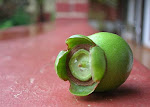
The Age of Exploration soon brought the European ships to the shores and trading posts in South India, a process that brought about dramatic changes in local food habits. Today, it seems incredulous to even imagine Andhra cruisine without the green-red chili peppers; or the diet a Keralan without tapioca (cassava), cashew nuts (parangi-andi or Ferenghi/Frank nuts) or peanuts (kappal-andi or "ship nuts"), tomato or potato, not to mention cash-crops like tobacco, coffee, cocoa, vanilla and rubber .
What has been the impact of the Columbian exchange on the Ayurvedic pharmacopeia? How many sutra's reflect the evolution and change in food habits? or the availability of new medicinal plant or animal extracts?
It would be interesting to know if anybody has attempted to adapt the classic prescriptions of Charaka, Sushruta and Vagbhata, in response to the changing times..
------------------------------------------------------------
LINKS
One of the standard textbooks used for training Ayurvedic physicians in Kerala is the "Ashtanga Hrdaya Sutra Sthana" (the essence of eight limbs), written or compiled by Vagbhata, a Karachi-born buddhist savant, in circa 800AD.
This treatise is an elaborate collection of sutra's that cover a wide range of topics that include the specific foods that are to consumed or avoided as a part of the healing regimen ("pathyam"). It includes specific references to the medicinal properties of beef (cow and buffalo - verse 66 & 67, Chapter - Annaswarupa Vijnaniya), despite what some born-again Hindu fanatics of today, may claim to the contrary.
What is interesting, however, is not what has been included in the "Asthanga Hrdaya" or any other classics, so much as what has been excluded. Since the time of Vagabhata, a wide range of new plants and trees have been introduced across the Asian continent. Perhaps the largest such tranche came in the Portuguese and Spanish galleons sailing across the pacific ocean from the "New World" - the Americas.
This exchange of animals, plants, culture, human populations (including slaves), communicable diseases, and ideas between the Eastern and Western hemispheres (Old World and New World), was termed as the Columbian Exchange.
The Age of Exploration soon brought the European ships to the shores and trading posts in South India, a process that brought about dramatic changes in local food habits. Today, it seems incredulous to even imagine Andhra cruisine without the green-red chili peppers; or the diet a Keralan without tapioca (cassava), cashew nuts (parangi-andi or Ferenghi/Frank nuts) or peanuts (kappal-andi or "ship nuts"), tomato or potato, not to mention cash-crops like tobacco, coffee, cocoa, vanilla and rubber .
What has been the impact of the Columbian exchange on the Ayurvedic pharmacopeia? How many sutra's reflect the evolution and change in food habits? or the availability of new medicinal plant or animal extracts?
It would be interesting to know if anybody has attempted to adapt the classic prescriptions of Charaka, Sushruta and Vagbhata, in response to the changing times..
------------------------------------------------------------
LINKS
- Astanga Hrdaya of Vagbhata, 3 Vols. (K.R. Srikantha Murthy (Tr.), 2008) - http://www.easternbookcorporation.com/moreinfo.php?txt_searchstring=143
- History of Ayurveda - http://www.trilokayurveda.com/history4.aspx